
The Yarn Knows First
Art, Mental Health, and Listening for What’s Already There


There is a particular loneliness that arrives when your inner life becomes loud, contradictory, or heavy, and the world keeps insisting you “produce,” “optimize,” or “push through.” It’s the loneliness of feeling like something inside you is speaking in a language you haven’t learned yet.
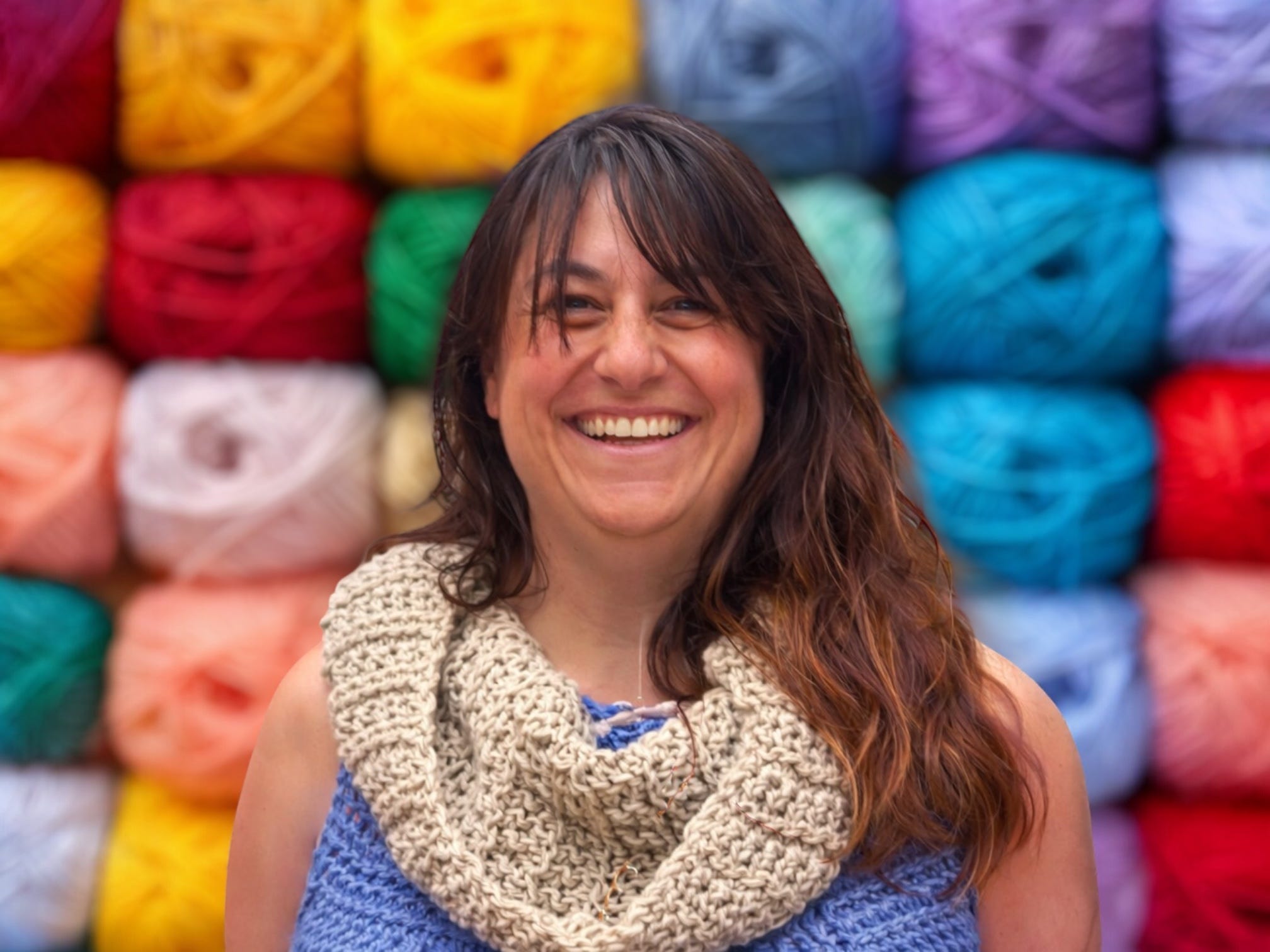
Writer-artist Kathryn Vercillo understands that language.
Her work sits at a rare and tender intersection, where art, creativity, and mental health are not treated as separate lanes but as overlapping currents.
Having gotten to know her during my time here on Substack, I’ve been often struck by how often she returns to one quiet truth: creative practice doesn’t just express what we know. It observes what we don’t yet have words for.
In Taoist terms, this is wu wei, not forcing insight, but allowing it to surface in its own time.
When the Hands Know First
One of the most powerful moments in Kathryn’s story begins not with writing or theory, but with yarn.
“Having emerged from depression,” she recalls, “I began researching the health benefits of the craft… and among many other ‘aha’ moments, one was: ‘oh that’s why my stitches are so loose sometimes and so tight other times!’”
Crochet became her mirror.
“In intense anxiety, the stitches would get super tight, and so would my muscles… I didn’t understand it at the time, but my hands were showing me something my conscious mind couldn’t articulate yet.”
This is deeply Taoist wisdom, whether one names it that way or not. The body, when allowed to move without agenda, often tells the truth long before the mind catches up. Like water responding to terrain, her hands adjusted to her inner weather.
“As I learned to read my own tension in the yarn,” she says, “I was learning to read my nervous system. The crochet became a kind of biofeedback before I had that word for it.”
Not self-improvement. Not self-diagnosis. Just attention.
Writing Around the Truth Until You Walk Into It
Kathryn speaks candidly about how this observant quality shows up in her writing as well.
“I’m one of those people who often writes to understand what I’m thinking,” she says. “Creative work often knows something before we do.”
She describes discovering patterns only in retrospect, months later, looking back at journals and essays.
“A word that kept appearing. Some repeating lines of thought.”
This resonates with my own experience as a writer and wanderer. We often imagine insight arriving as a thunderclap, but more often it creeps in sideways, leaving breadcrumbs. The Tao never announces itself. It reveals itself.
Kathryn has built much of her work around helping others see these patterns, what she calls Creative Health Cartography.
“Sometimes we’re too close to our own creative patterns to see them,” she explains. “Having someone else map the terrain can reveal connections between our art and our wellbeing that we’ve been living inside without recognizing.”
The Taoists would nod knowingly here. When you’re inside the river, it’s hard to see the current.
Psychology Gave Language. Art Gave Humility.
Kathryn’s graduate training in psychology gave her names for what she was already sensing.
“I learned about defense mechanisms, attachment styles, the ways trauma lives in the body.”
But she’s clear that frameworks only go so far.
“One of the most profound things I learned… was the power of the simple (yet also incredibly difficult) act of just holding space for someone.”
This is where her voice softens, and where many readers may feel seen.
She speaks of anxiety sharpening focus but preventing action. Of depression flattening not just mood but metaphor. Of emotional fragmentation sometimes producing surprising work because “the usual editorial voice has gone offline.”
She also shares openly about being diagnosed with double depression in her late twenties.
“That diagnosis helped me understand that what I’d been experiencing wasn’t a character flaw or a lack of willpower.”
In Taoist philosophy, suffering often arises when we misname the river as a personal failure rather than a condition of terrain. Kathryn’s clarity here offers relief.
“Psychology taught me to look for patterns,” she says. “Creative work taught me that patterns are never the whole story.”
Art as Regulation, Not Judgment
Perhaps the most grounding aspect of Kathryn’s journey is her refusal to romanticize art as salvation.
She didn’t come to crochet as a wellness trend.
“I came to crochet out of desperation, not therapeutic intention.”
She couldn’t read. Meditation was inaccessible. Exercise felt impossible. But she could move a hook through yarn.
“I would be sobbing, and then I would pick up the hook, and eventually the sobbing would stop.”
The rhythm mattered. The tactile reality mattered. The forgiveness of the medium mattered.
“Unlike knitting,” she notes, “crochet lets me work without fear of collapse.”
That line alone feels like a mental health koan.
In a culture obsessed with output, she makes a radical suggestion: separate making from judging.
“Make without assessing. Let the nervous system have its experience.”
This is classic Taoist restraint. Do the thing. Don’t rush to name it.
Companion, Not Cure
Kathryn is especially clear about one seductive trap: expecting art to fix us.
“I treated creativity like medicine I was prescribing myself,” she admits. “When it didn’t cure me, I felt like I was failing at both art and recovery.”
Her honesty here is a balm.
“Crochet saved my life,” she says, “but crochet alone didn’t save my life.”
Art, she explains, is one thread in a larger web of care. When we load it with impossible expectations, it buckles.
“Art doesn’t only express what we already know. It reveals what we didn’t realize was still living in us. And that revelation is not always soothing.”
Sometimes art is rupture, not repair.
That, too, is part of the Way.
Gentle Words for Tender Times
When asked what she’d offer those standing at this fragile intersection, her guidance is simple and humane.
“You don’t have to make anything right now.”
If you’re in a crisis, tend to the crisis.
If you’re not okay but still feel called, go small. Go private. Lower the stakes.
“Make something ugly on purpose.”
And then this, which feels like it should be printed and carried in a pocket:
“You’re not behind. You’re not broken. You’re in a season. Seasons change.”
The Tao has always understood seasons better than timelines.
Art, like the Tao, doesn’t rush. It waits. It accompanies. It stays close, even when things are messy.
And sometimes, that quiet companionship is the most healing thing of all.
If these daily, bite-sized Daily Chocolate Taoist reflections landing in your inbox have steadied your nervous system, cracked open a new way of seeing, or helped you release what no longer fits, I invite you to support my work at $6 a month or $60 for the year, a simple way to keep the fire lit.
And if you’re feeling extra generous now that the calendar has now turned to 2026, would you be kind enough to support me with a dirty chai tea with almond milk (or six) to fuel my journaling sessions where most of these thoughts are born.
Warm cup, quiet mind, dangerous ideas.
Thank you for reading, thank you for thinking differently, and thank you for stepping into 2026 with intention, even if you’ve sworn off goals entirely. Here’s to less forcing, more flow, and a year that unfolds better than anything we could have planned.
Happy 2026
Diamond-Michael Scott, aka The Chocolate Taoist.
Chocolatetaoist@proton.me

 | A guest post by
|